People usually ask about a dealer license for one reason: they have heard that dealers buy cars cheaper at auction, and they want into that lane. That instinct is not wrong. A lot of clean trade-ins, off-lease cars, fleet vehicles, and dealer-to-dealer units do move through wholesale channels before a retail buyer ever sees them.
The trap is thinking the license is the whole problem. It is not. Dealer auction access is usually a stack of requirements: state licensing, business documents, auction registration, authorized users, payment setup, transport, title handling, and platform rules. You can clear one step and still not be ready to buy intelligently.
First, what kind of auction are we talking about?
"Car auction" is too broad. A public government auction, a salvage auction, a charity auction, and a dealer-only wholesale auction are not the same thing. The license question changes depending on which one you mean.
Public auctions
These may allow regular buyers, depending on the company and state. The tradeoff is that the inventory can include salvage, repossessions, municipal vehicles, donated cars, or units with thinner inspection information. Easier access does not always mean lower risk.
Dealer-only auctions
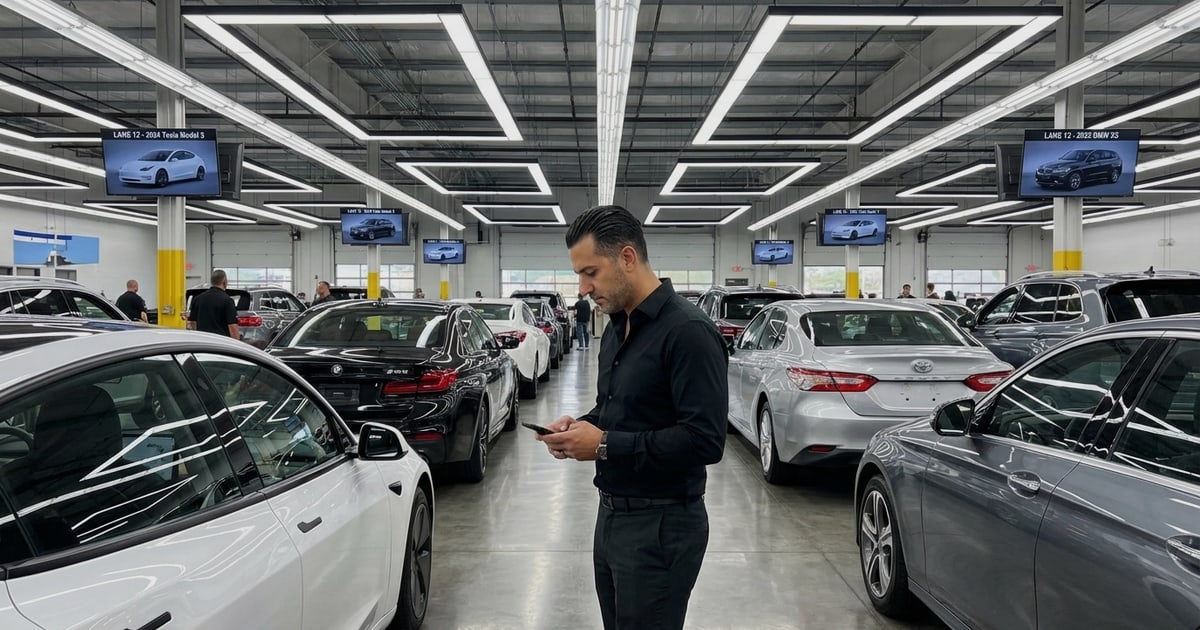
These are wholesale channels built for licensed automotive businesses. Manheim, ADESA, OPENLANE, ACV, AVDA, and similar platforms may require dealer credentials, AuctionACCESS or comparable credentialing, and auction-specific approval before you can bid.
What the dealer license actually does
A dealer license is permission to operate as a vehicle dealer under your state's rules. In California, the DMV treats this as occupational licensing. The process can involve application forms, dealer education or testing, business-location review, records, fees, renewal requirements, and other compliance items depending on the license type.
That is very different from "I want to buy one car for myself." If you are planning to sell cars as a business, the license may be the right path. If you are trying to buy one personal vehicle, it is usually a lot of structure to build around one transaction.
Why the license takes real work
California does not treat a dealer license like an online membership. The DMV application stack is closer to opening a regulated business. For a used dealer or wholesale-only dealer, the DMV checklist points to items such as the application packet, live scan, dealer education certificate, proof that you passed the dealer written exam, Secretary of State filings for entities, fictitious business name paperwork when needed, resale permit information, and photos of the business location.
The written exam is not just a formality. DMV says used vehicle dealers and wholesale-only dealers may need dealer education and must pass the used dealer test. The dealer license page also notes that applicants get three attempts; if someone fails, they pay a retest fee and wait a week, and after the third failed attempt the education/test cycle starts again. That tells you how DMV views the license: it is meant for people who understand dealer rules, not for someone casually trying to buy one car at Manheim.
The real estate piece is where people get surprised
The business location is one of the big reasons this is not a casual shortcut. After DMV processes an application, the applicant is told to schedule an inspection of the business location. DMV says the inspector may inspect the main business office, books and records, the display area when one is required, and signs when one is required.
For a retail dealer, that can mean a real office, a display area sized for the type of vehicles being sold, and signage that identifies the business. DMV's page also says a wholesale-only dealer must have an office, but the display area and sign requirements can differ from a retail dealer. That distinction matters. People hear "dealer license" and picture a login to an auction site. DMV is thinking about an established place of business, records, consumer protection rules, and whether the operation can be inspected.
This is also why "cheap dealer license" advice online is often misleading. The hard part is not only the application fee. It is having the correct business setup, documentation, inspection readiness, insurance/bond pieces where required, and the ongoing obligation to operate like a dealer after the license is issued.
Auction approval is separate from licensing
Even with a valid license, an auction can still require its own registration process. ADESA, for example, tells buyers to register as a dealer and lists items such as an AuctionACCESS number, dealer license or equivalent state document, tax certificate, and other state documents that may apply. Manheim's marketplace materials also reference AuctionACCESS numbers for certain access.
In plain English: a license can make you eligible to apply, but it does not magically make you ready to bid everywhere. The auction still has to know who you are, who is authorized to act for the dealership, how payment will be handled, and what rules you are agreeing to.
What AuctionACCESS actually is
AuctionACCESS is not a secret auction site. It is a credentialing system used across the wholesale auction world. Its FAQ describes membership as simplified credentialing for more than 400 auction marketplaces and online channels in North America. It also says eligibility is restricted to licensed, credentialed vehicle dealers and their authorized representatives.
That "authorized representative" part is important. Wholesale auctions need to know which people are allowed to act for a dealership. If a dealership adds or removes employees or contractors, credentialing needs to reflect that. This is about identity, authority, payment risk, and keeping retail buyers out of dealer-only channels.
ADESA's process shows how this works in practice. To register online, ADESA asks for the AuctionACCESS number, birthdate, the last four digits of the ID used for AuctionACCESS, and a current email address. For in-person/live auction buying, ADESA says requirements can vary by state and may include the dealer license or equivalent state document, sales tax certificate, dealer bond where required, voided business check, and salesperson licenses for representatives. None of that is hard because the auction wants to be annoying. It is hard because wholesale cars move quickly and the auction has to know who can buy, who can pay, and who is responsible when something goes wrong.
When getting licensed makes sense
Getting licensed makes sense when you are actually entering the car business: buying and selling regularly, keeping records, dealing with tax and title obligations, maintaining the required business setup, and accepting that compliance is part of the job.
It does not make much sense when the goal is "I want to buy one clean SUV, Porsche, truck, M car, or commuter car without paying retail markup." At that point the license can become a distraction from the actual buying decision: is this car good, is the title clean, what are the fees, what is the transport plan, and does the all-in number beat the best retail option?
The part people underestimate: buying well
Dealer auctions move quickly. A good price can become a bad purchase if the condition report was weak, the title brand was missed, the arbitration window is short, the transport cost is high, or the car needs more recon than the photos suggested. The license only gets you closer to the lane. It does not inspect the car for you.
Before any bid, the useful work is basic but unglamorous:
- Read the condition report like it is incomplete until proven otherwise.
- Check title status, odometer notes, seller disclosures, and history reports.
- Estimate buyer fees, transport, tax, registration, and likely reconditioning.
- Compare the all-in auction number against real retail alternatives.
- Set the maximum bid before the auction starts and be willing to let the car go.
If you are not a dealer, what are the realistic options?
There are really three paths.
- Use public auctions. This gives you easier access, but you need to be comfortable with the inventory type and risk.
- Get licensed. This only makes sense if you are building a real business, not trying to shortcut one purchase.
- Work through someone already licensed. A dealer, buyer's agent, or auto broker can search dealer-only channels and handle the auction process if their service model is transparent.
That third option is where Axis Auto fits. Not as a magic "wholesale price" button, and not as a guarantee that every auction car is a deal. The job is to define the target, search the right channels, review candidates, model the real all-in cost, and bid only when the numbers and condition make sense.
How a brokered auction purchase should work
If you use a broker or dealer to access wholesale inventory, ask for the process before you commit. A clean process should include:
- A written target: year range, trim, mileage, colors, options, budget, and deal-breakers.
- A clear explanation of which channels will be searched.
- Condition notes and history before any bid approval.
- A real all-in estimate, not just the hammer price.
- A maximum bid you approve in advance.
- A plan for payment, title, transport, arrival inspection, and problems after sale.
If someone only says "we can get dealer prices" and skips the rest, that is not enough. Auction access is useful only if the buying discipline is there.
So, do you need the license?
If you want to personally bid at dealer-only auctions, generally yes, you need dealer credentials and auction approval. If you want to buy one car and avoid retail markup where possible, you probably do not need to become a dealer. You need a better way to evaluate and access inventory.
For some cars, the best answer will still be a retail listing, a private seller, or a specialty platform. For others, dealer auction sourcing can make sense. The point is to compare the routes honestly before chasing the word "wholesale."
Official source notes
Licensing and auction rules change. These are the official/current sources checked for this guide:
- California DMV vehicle dealer licensing
- California DMV used dealer / wholesale-only application checklist
- AuctionACCESS eligibility and credentialing FAQ
- Manheim registration and AuctionACCESS number references
- ADESA / OPENLANE buyer registration
Want to know if auction sourcing makes sense for a specific car?
Send the target year, model, trim, mileage range, budget, and must-have options. We will tell you whether dealer auction sourcing is worth exploring or whether you are better off looking at retail or private-party cars first.
Related guides
This guide is general information, not legal advice. If you are trying to become licensed, use the DMV and auction sources above and speak with qualified professional help for your exact situation.